
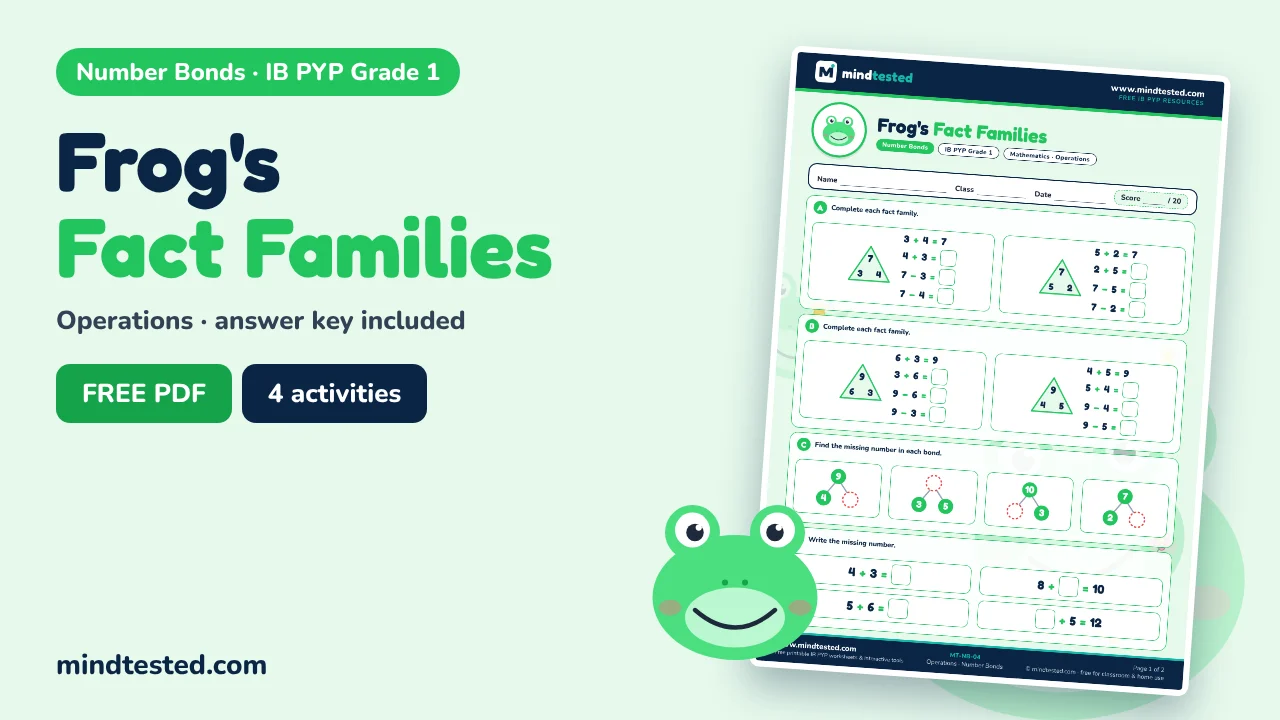
Number Bonds in IB PYP Grade 1 Mathematics
A number bond shows how a whole number splits into two parts, for example 10 is 6 and 4. Knowing number bonds to 10 and 20 makes mental addition and subtraction much faster, and bonds lead naturally to fact families.
PYP learning is inquiry-based, so every worksheet here is short, colourful and playful, with a friendly animal guide and a teacher answer key on page 2.
What learners practise
- Part-part-whole bond circles
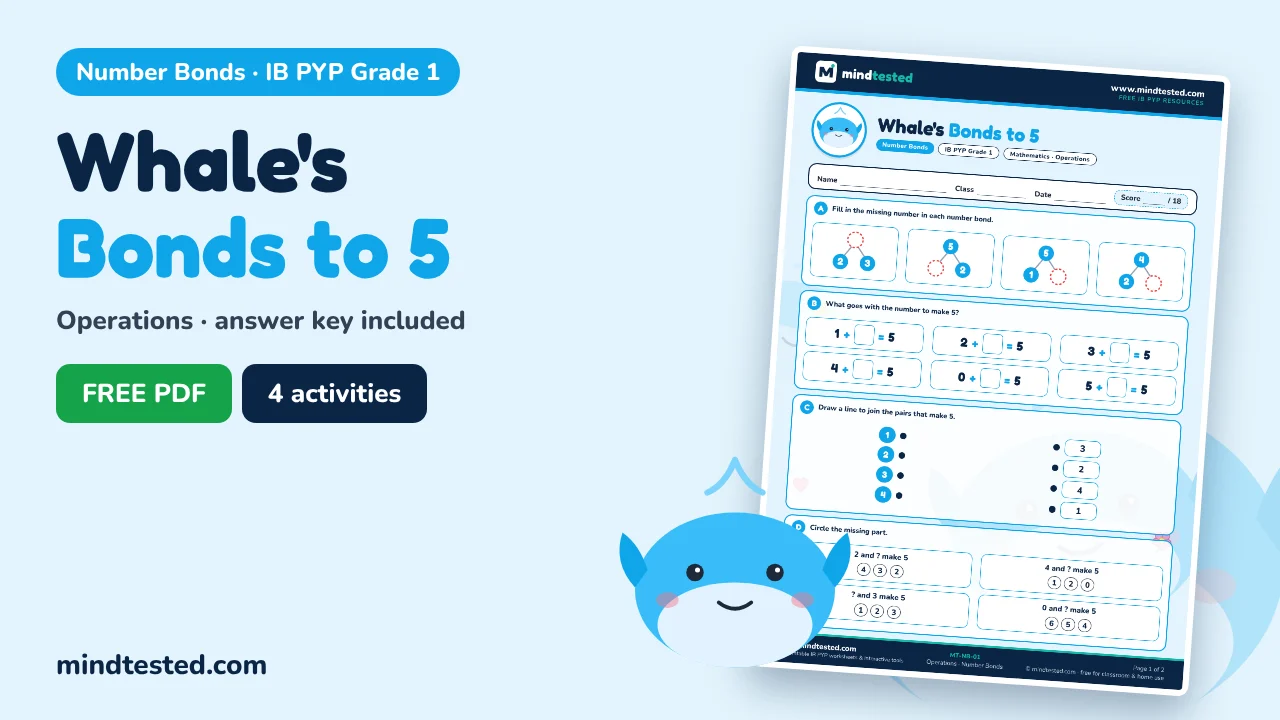
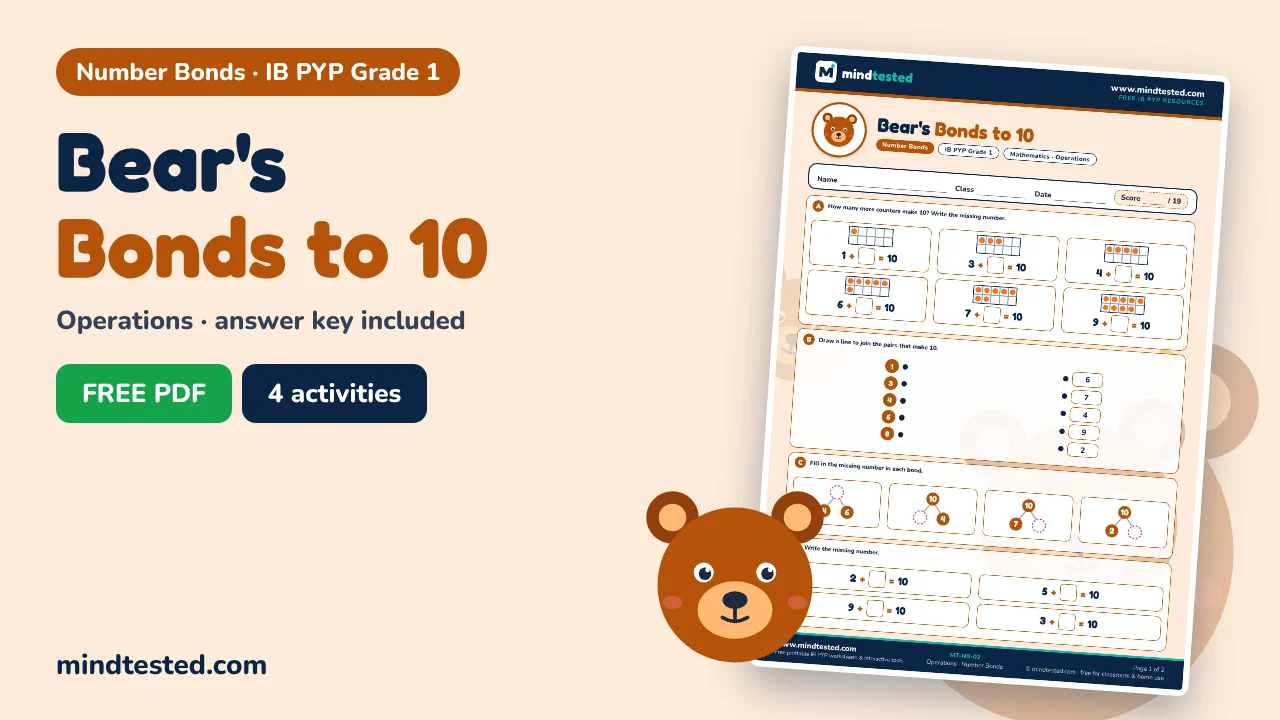
- Pairs that make 5 and 10
- Using ten frames to find missing partners
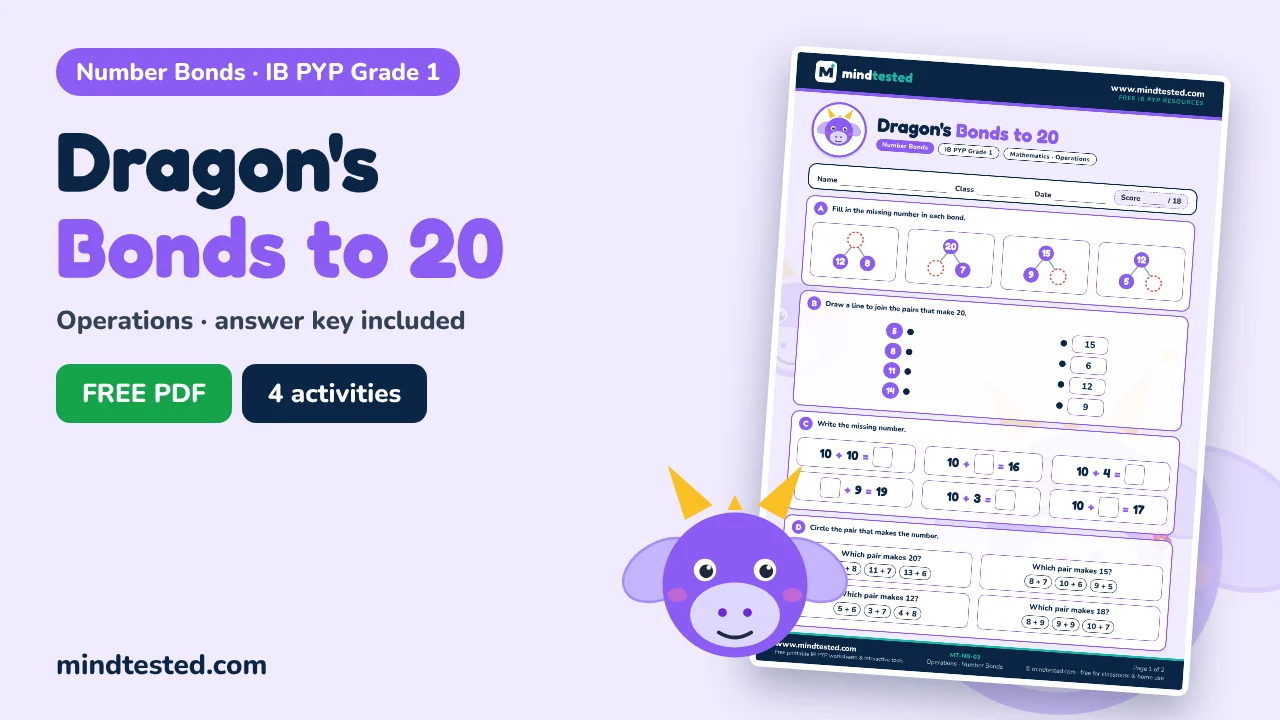
- Bonds to 20 using 10 as a helper
- Fact families linking adding and subtracting
Number bonds at a glance
- Bonds to 5: 1 + 4, 2 + 3
- Bonds to 10: 1 + 9, 2 + 8, 3 + 7, 4 + 6, 5 + 5
- Bonds to 20: 10 + 10, 12 + 8, 15 + 5
- Fact family: 3, 4 and 7 make 3 + 4, 4 + 3, 7 − 3 and 7 − 4
For students
Read each instruction carefully, try every question and colour the animal when you finish.
For parents
Print on A4, read the instructions aloud together and let your child work alone before you check.
For teachers
Use a worksheet as a starter, homework or exit ticket. Each one has a name, class and date box and an answer key.
Practise bonds to 10 with your fingers: show 10 fingers, fold some down and ask “How many are left up?”
Quick answers
Who is the Number Bonds page for?
It is for IB PYP Grade 1 Mathematics learners, typically aged 6–7, and for the parents and teachers who support them.
Why are number bonds important?
They help children see numbers as made of parts, which makes adding, subtracting and later multiplying much easier.
Which number bonds should my child know first?
Start with bonds to 5, then to 10, then use 10 as a stepping stone for bonds to 20.
How should I use these worksheets?
Pick one worksheet, let your child try it without help first, then check together with the answer key on page 2. Short sessions of five to ten minutes, a few times a week, work best.
Keep exploring
 Operations
 Addition
 Subtraction