

Addition in IB PYP Grade 1 Mathematics
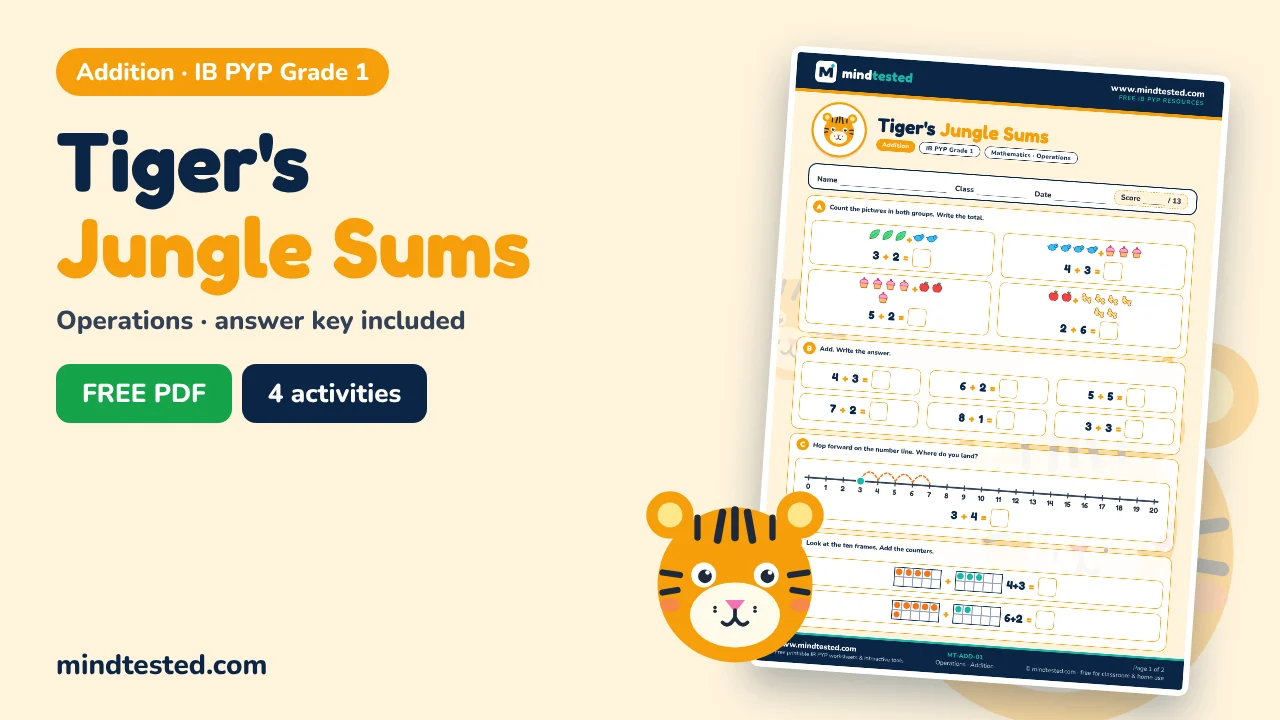
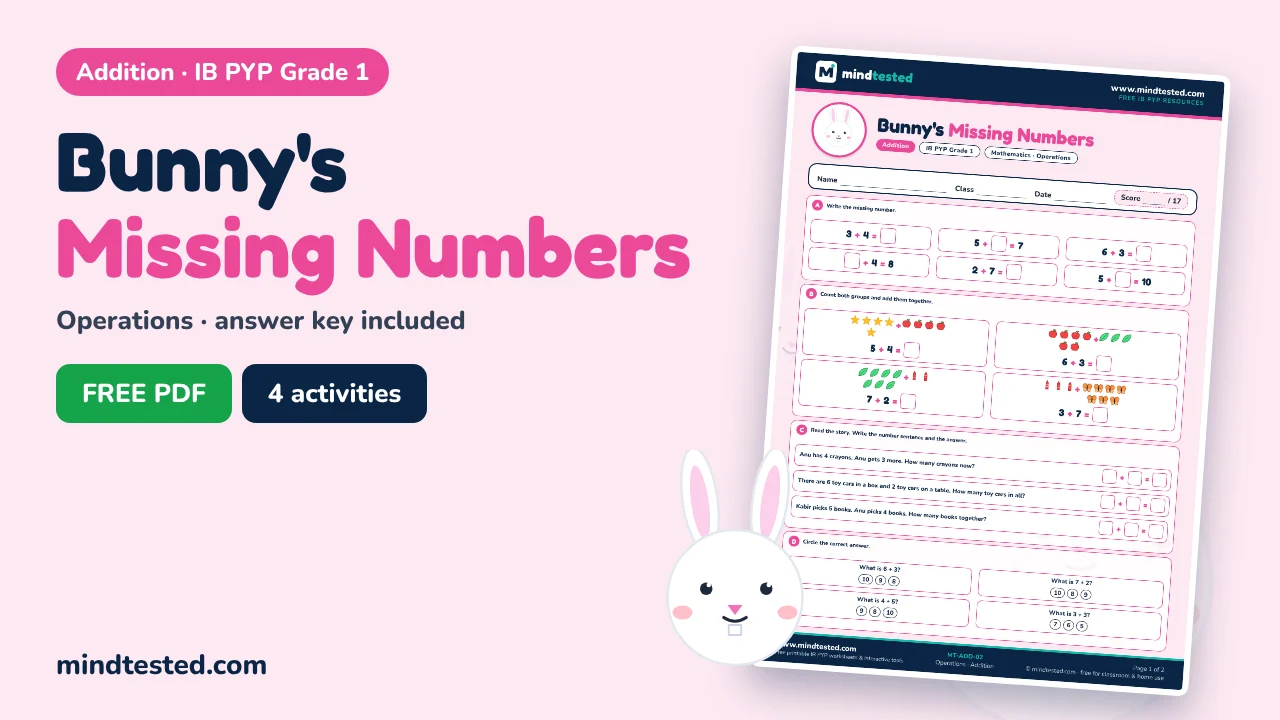
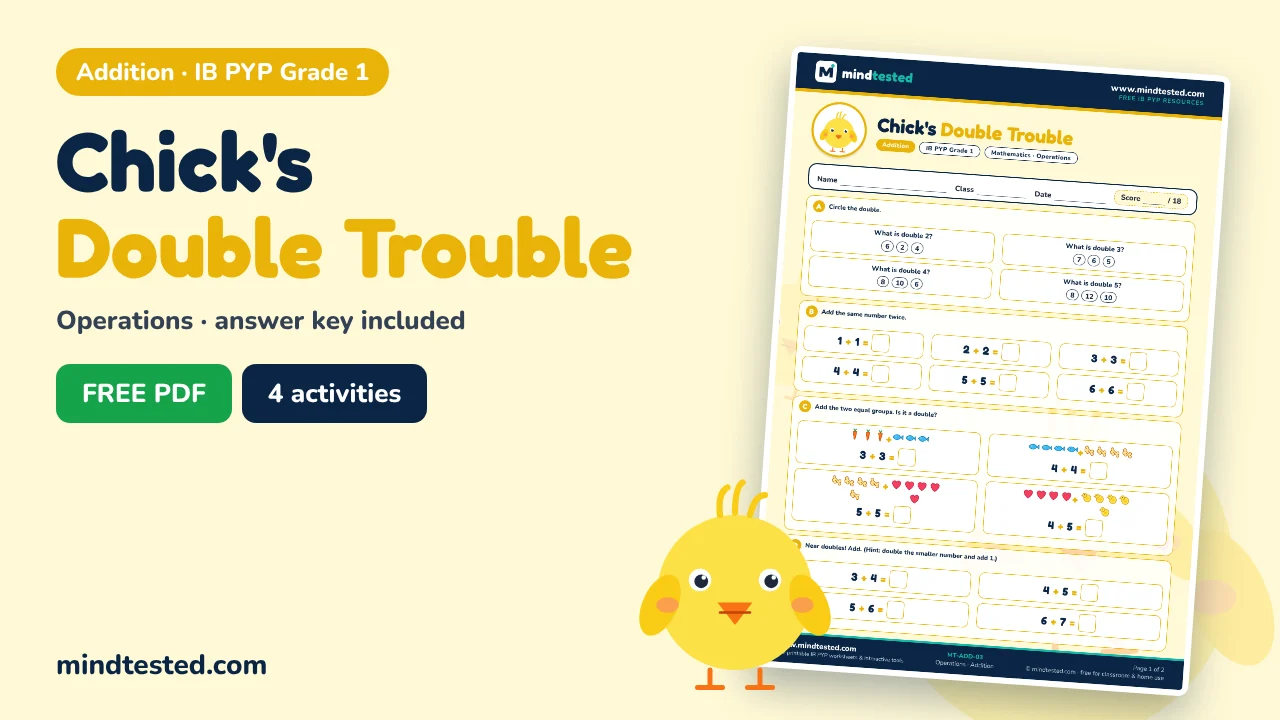
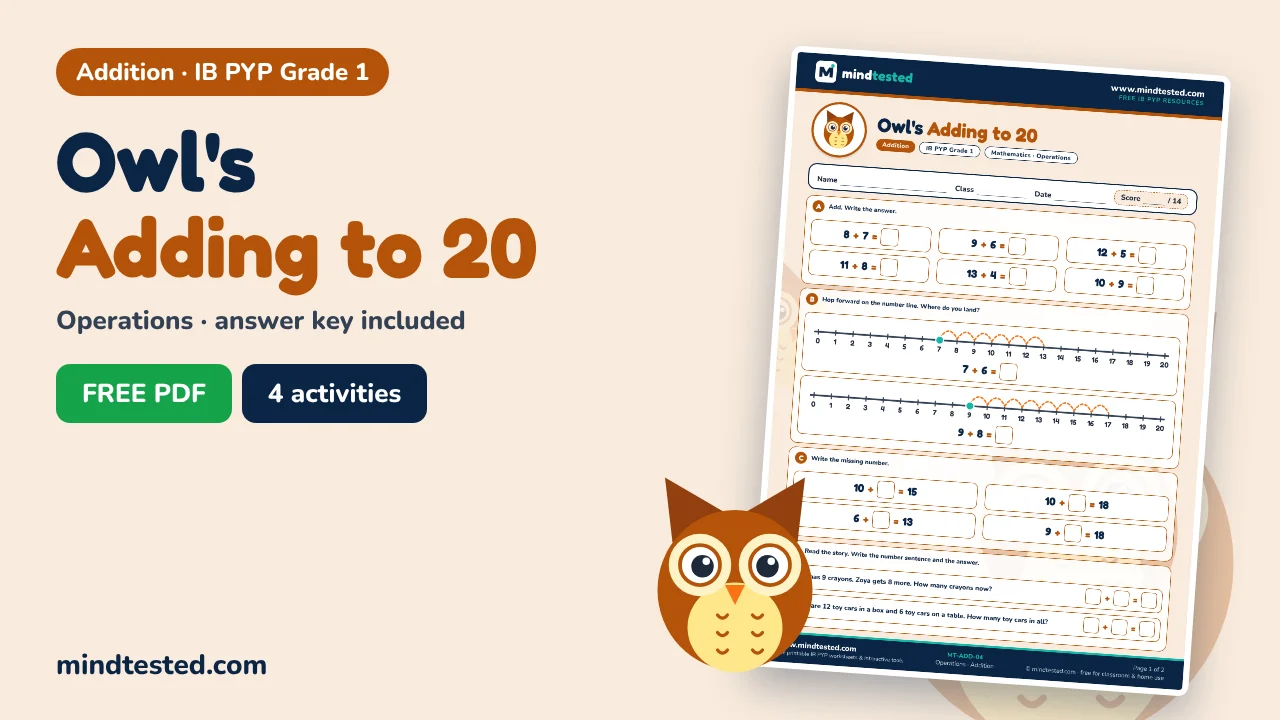
Addition means putting groups together to find the total. Grade 1 learners start by counting both groups, then count on from the bigger number, use a number line, spot doubles such as 4 + 4, and finally add within 20.
PYP learning is inquiry-based, so every worksheet here is short, colourful and playful, with a friendly animal guide and a teacher answer key on page 2.
What learners practise
- Adding two groups of pictures
- Counting on along a number line
- Using ten frames to add within 10
- Doubles and near doubles
- Finding a missing number in an adding sum
Addition at a glance
- Add means put together; the answer is called the total or sum
- Doubles: 3 + 3, 4 + 4, 5 + 5
- Count on: start at the bigger number and hop forward
- Order: 3 + 5 and 5 + 3 give the same total
For students
Read each instruction carefully, try every question and colour the animal when you finish.
For parents
Print on A4, read the instructions aloud together and let your child work alone before you check.
For teachers
Use a worksheet as a starter, homework or exit ticket. Each one has a name, class and date box and an answer key.
Teach “start with the bigger number, then count on.” For 2 + 7, say seven, then eight, nine. It is faster than counting everything.
Quick answers
Who is the Addition page for?
It is for IB PYP Grade 1 Mathematics learners, typically aged 6–7, and for the parents and teachers who support them.
Which numbers do the addition worksheets use?
They start with totals within 10, then move to totals within 20.
How do I help my child add faster?
Practise doubles and number bonds to 10, then count on from the bigger number.
How should I use these worksheets?
Pick one worksheet, let your child try it without help first, then check together with the answer key on page 2. Short sessions of five to ten minutes, a few times a week, work best.
Keep exploring
 Operations
 Subtraction
 Number Bonds