
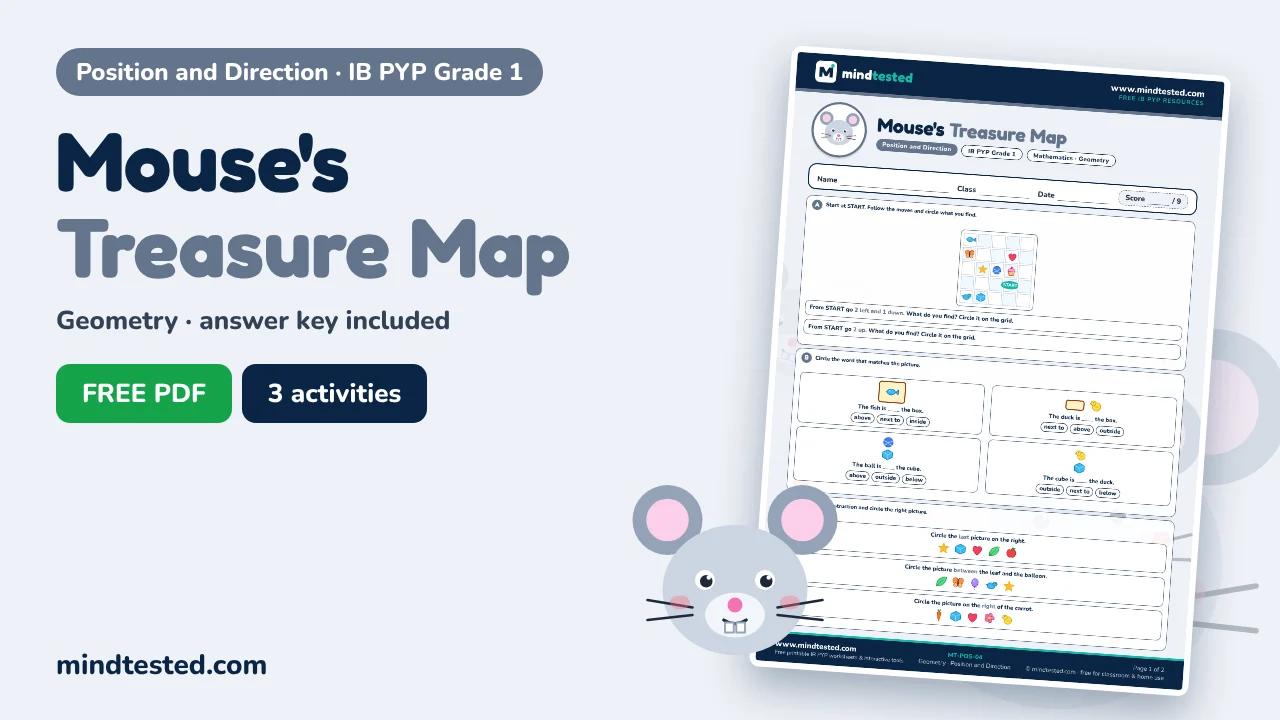
Position and Direction in IB PYP Grade 1 Mathematics
Position words say where something is, and direction words say how to get there. Grade 1 learners use words such as above, below, next to, inside, outside, left and right, and follow simple instructions on a grid.
PYP learning is inquiry-based, so every worksheet here is short, colourful and playful, with a friendly animal guide and a teacher answer key on page 2.
What learners practise
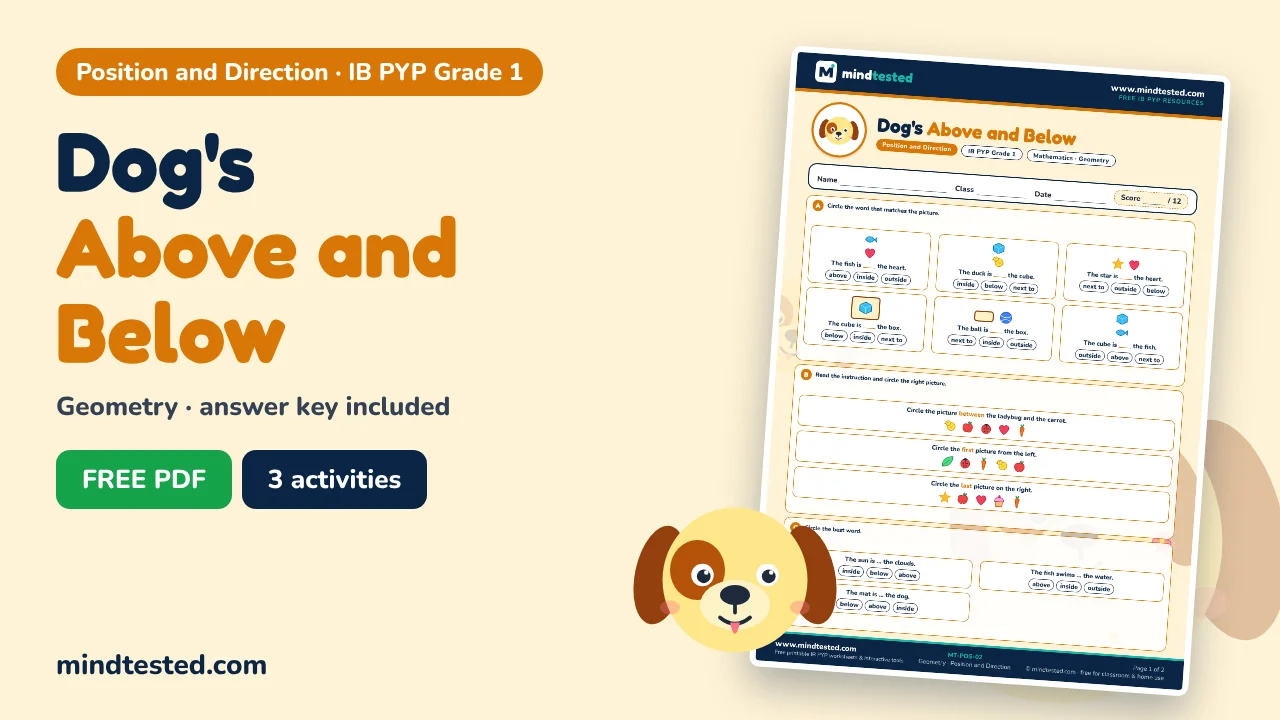
- Using above, below and next to
- Using inside and outside
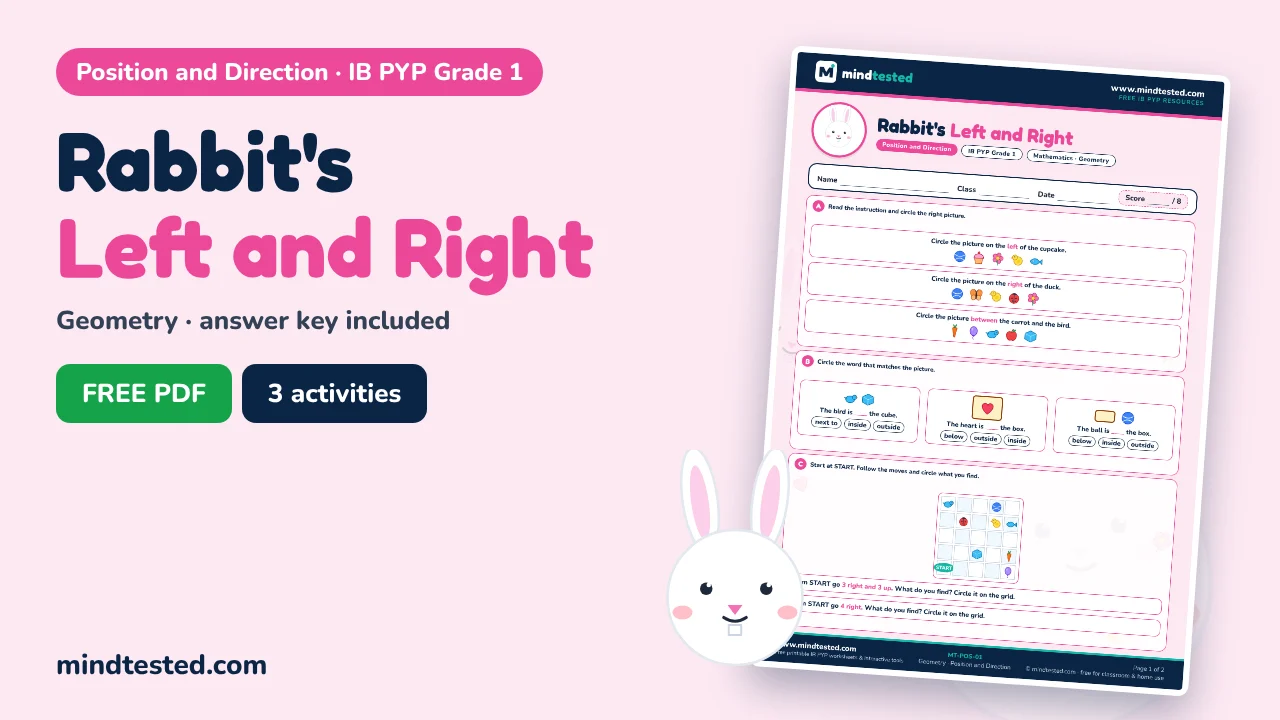
- Finding things on the left and right
- Naming first, last and between in a row
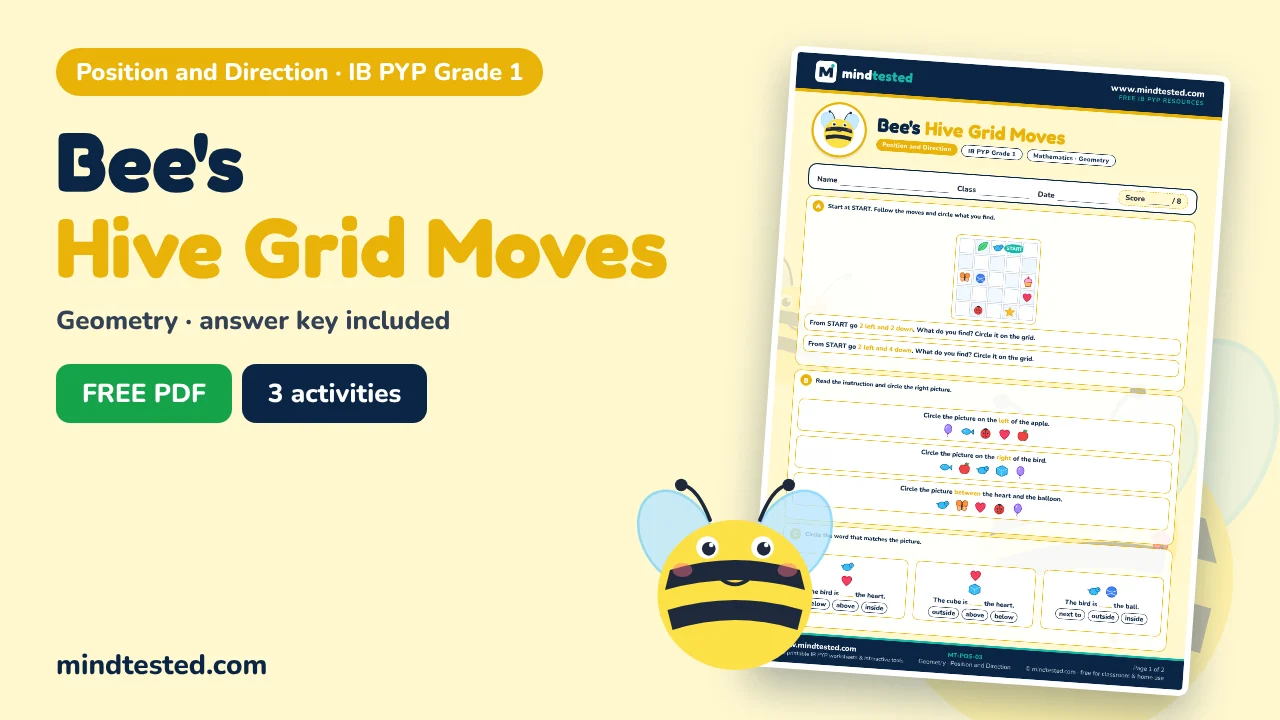
- Following moves on a grid
Position at a glance
- Above / below: higher or lower than something
- Inside / outside: in the box or not
- Left / right: the two sides of your body
- Between: in the middle of two things
For students
Read each instruction carefully, try every question and colour the animal when you finish.
For parents
Print on A4, read the instructions aloud together and let your child work alone before you check.
For teachers
Use a worksheet as a starter, homework or exit ticket. Each one has a name, class and date box and an answer key.
Play “Simon says” with position words, for example “Put the book under your chair.” Moving makes left and right easier to remember.
Quick answers
Who is the Position and Direction page for?
It is for IB PYP Grade 1 Mathematics learners, typically aged 6–7, and for the parents and teachers who support them.
Why do children mix up left and right?
It takes practice. A simple trick is to make an “L” with the left hand.
What are grid moves?
They are simple instructions such as “2 left and 1 down” that tell you how to move across a grid.
How should I use these worksheets?
Pick one worksheet, let your child try it without help first, then check together with the answer key on page 2. Short sessions of five to ten minutes, a few times a week, work best.
Keep exploring
 Geometry
 2D Shapes
 3D Solids