

Coins and Notes in IB PYP Grade 1 Mathematics
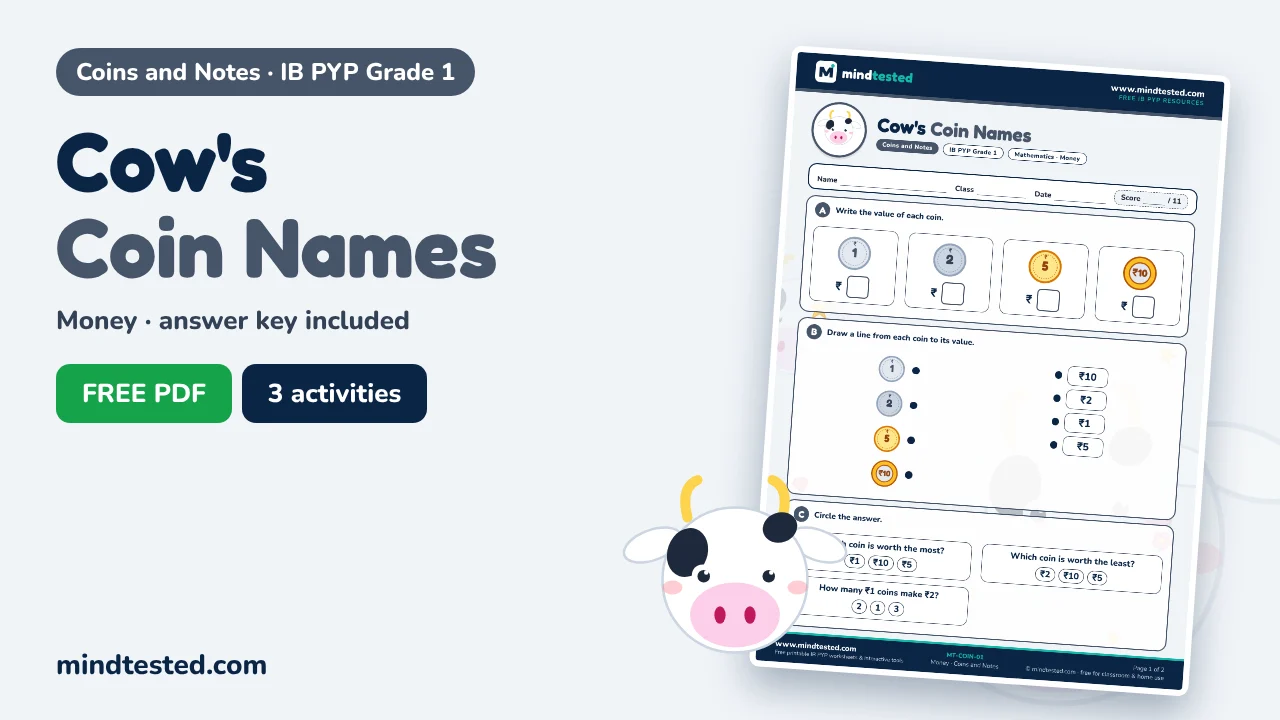
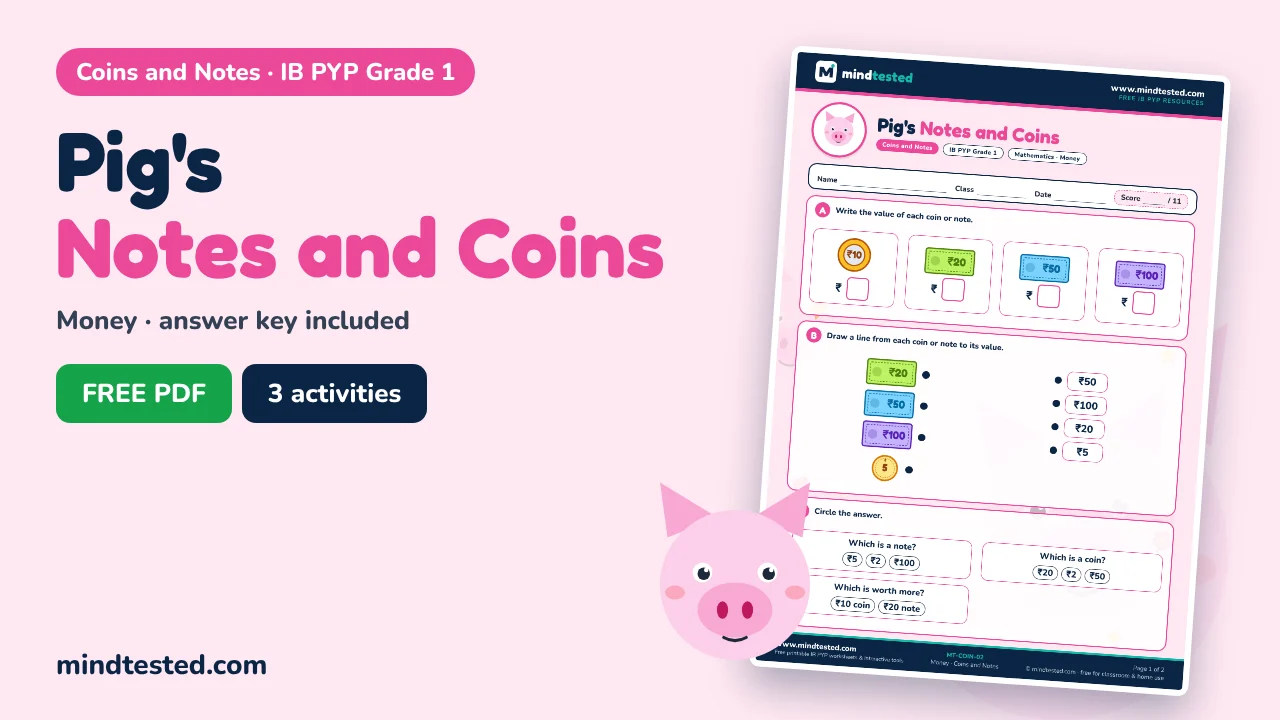
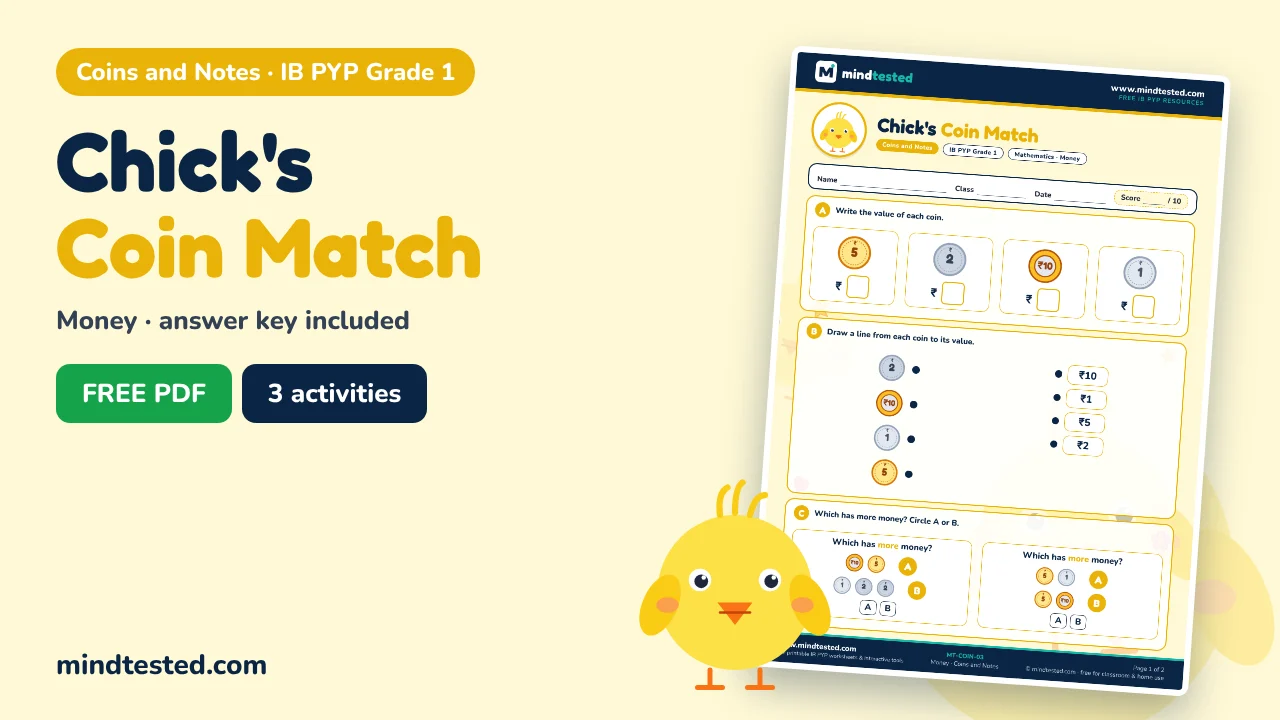
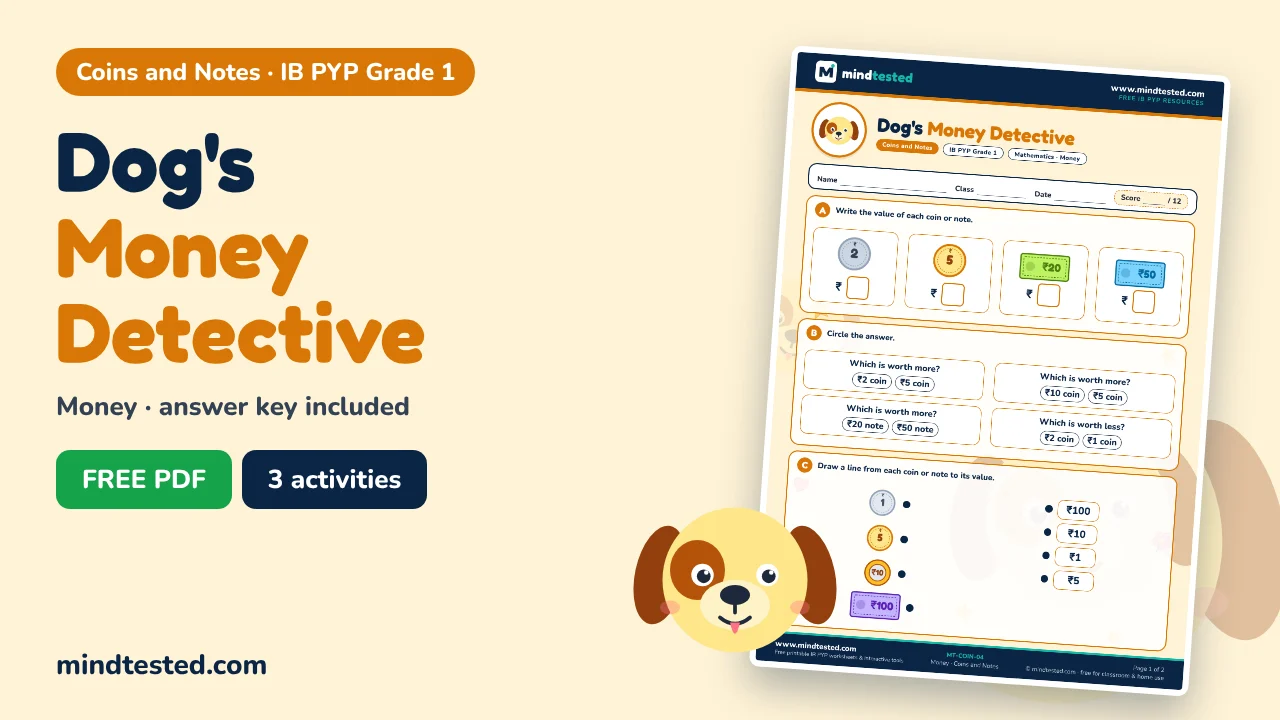
Coins and notes are the money we use every day. Grade 1 learners recognise rupee coins (₹1, ₹2, ₹5, ₹10) and notes (₹10, ₹20, ₹50, ₹100), name their values and compare which is worth more.
PYP learning is inquiry-based, so every worksheet here is short, colourful and playful, with a friendly animal guide and a teacher answer key on page 2.
What learners practise
- Naming coins by value
- Naming notes by value
- Telling coins from notes
- Matching money to its value
- Comparing which is worth more
Coins and notes at a glance
- Coins: ₹1, ₹2, ₹5, ₹10
- Notes: ₹10, ₹20, ₹50, ₹100
- ₹10 can be a coin or a note
- Bigger value does not always mean a bigger coin
For students
Read each instruction carefully, try every question and colour the animal when you finish.
For parents
Print on A4, read the instructions aloud together and let your child work alone before you check.
For teachers
Use a worksheet as a starter, homework or exit ticket. Each one has a name, class and date box and an answer key.
Let children handle real coins and notes. Sort them by size, colour and value to spot differences.
Quick answers
Who is the Coins and Notes page for?
It is for IB PYP Grade 1 Mathematics learners, typically aged 6–7, and for the parents and teachers who support them.
Why start with recognising coins?
Children must know what each coin is worth before they can count or add money.
Are real coins needed?
They help, but the worksheets show clear pictures of each coin and note.
How should I use these worksheets?
Pick one worksheet, let your child try it without help first, then check together with the answer key on page 2. Short sessions of five to ten minutes, a few times a week, work best.
Keep exploring
 Money
 Counting Money
 Shopping and Change