
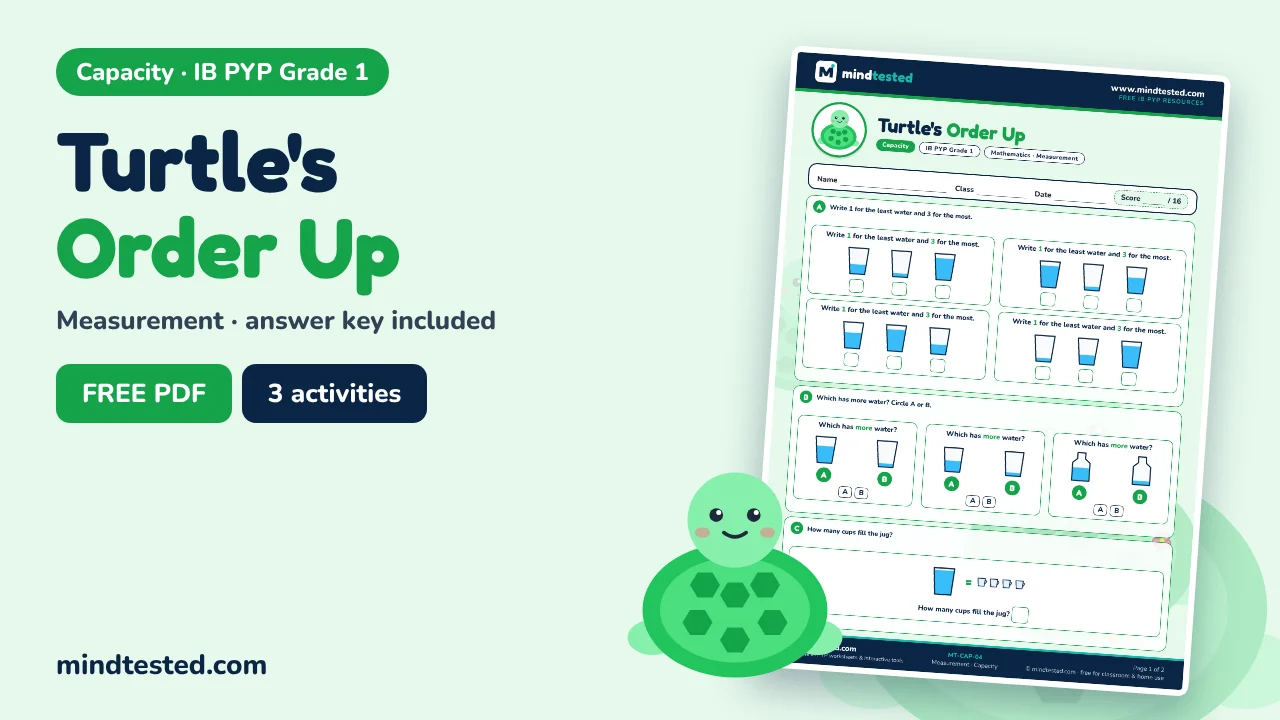
Capacity in IB PYP Grade 1 Mathematics
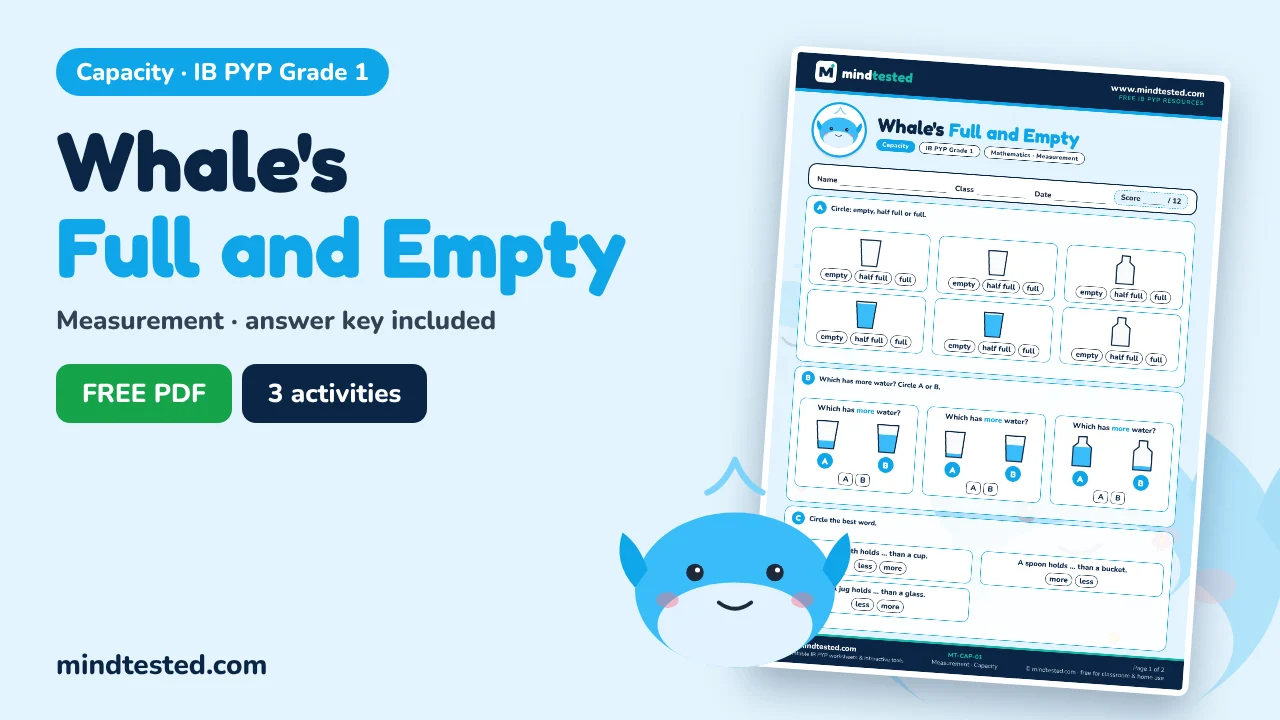
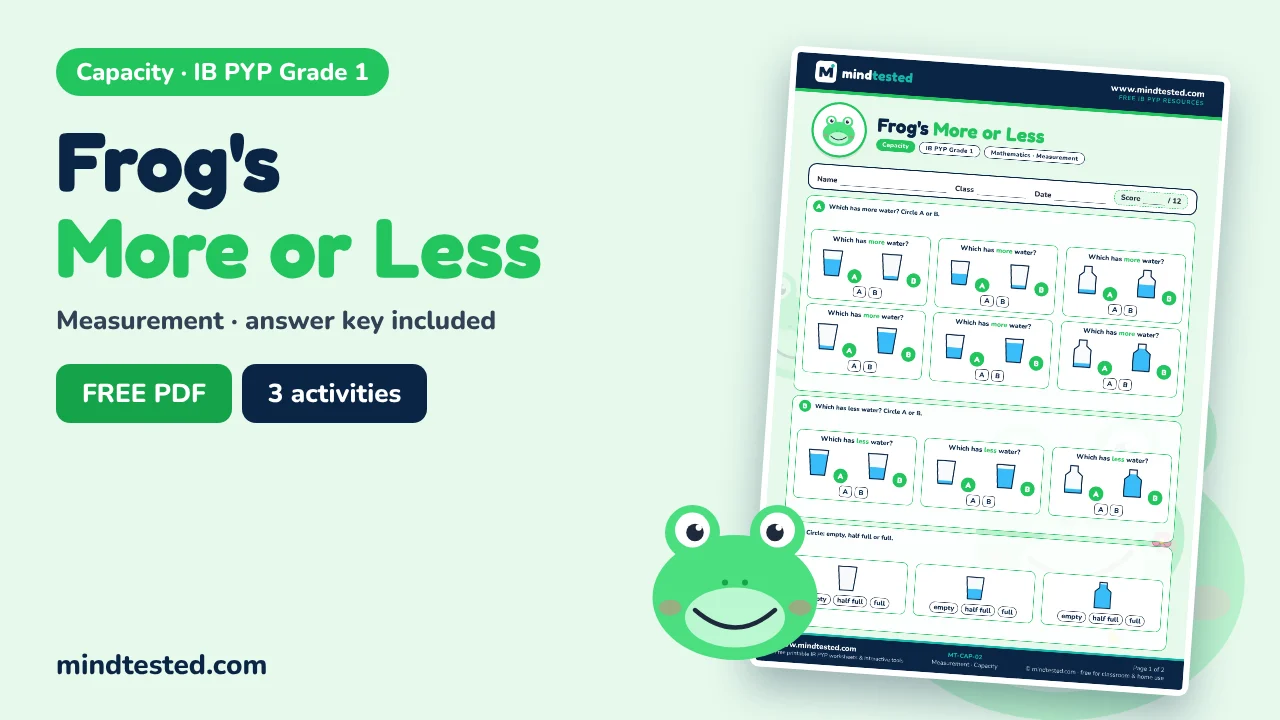
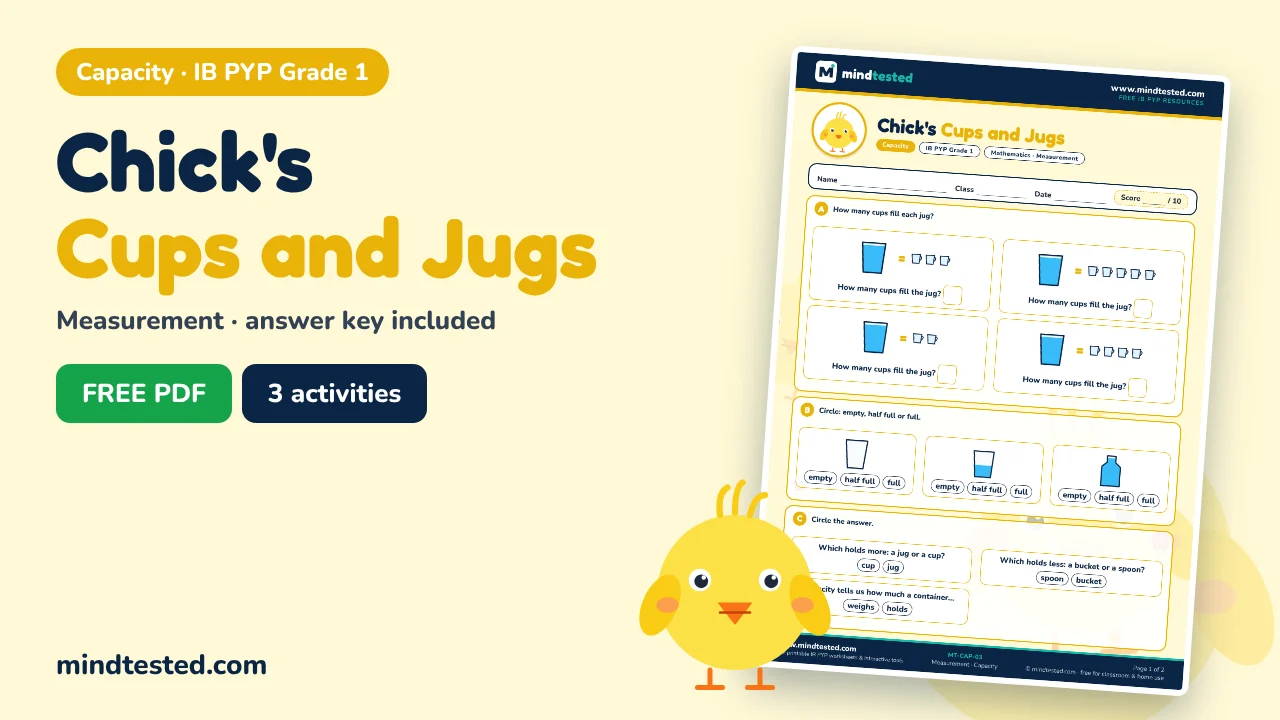
Capacity is how much a container can hold. Grade 1 learners describe containers as full, half full or empty, compare which holds more or less, and measure capacity by counting cups.
PYP learning is inquiry-based, so every worksheet here is short, colourful and playful, with a friendly animal guide and a teacher answer key on page 2.
What learners practise
- Describing full, half full and empty
- Comparing which holds more or less
- Ordering containers by capacity
- Counting cups to fill a jug
- Using capacity words in sentences
Capacity at a glance
- Full: no more room
- Half full: about half the container
- Empty: nothing inside
- Holds more / less: compares two containers
For students
Read each instruction carefully, try every question and colour the animal when you finish.
For parents
Print on A4, read the instructions aloud together and let your child work alone before you check.
For teachers
Use a worksheet as a starter, homework or exit ticket. Each one has a name, class and date box and an answer key.
Bath time or water play is perfect for capacity. Ask “How many cups fill the jug?” and let children test their guesses.
Quick answers
Who is the Capacity page for?
It is for IB PYP Grade 1 Mathematics learners, typically aged 6–7, and for the parents and teachers who support them.
What is capacity?
The amount a container can hold, such as how much water fits in a jug.
Why use cups to measure?
Cups are a simple non-standard unit. Counting them helps children understand measuring before they meet litres.
How should I use these worksheets?
Pick one worksheet, let your child try it without help first, then check together with the answer key on page 2. Short sessions of five to ten minutes, a few times a week, work best.
Keep exploring
 Measurement
 Length
 Mass